Every March, millions of Americans fill out NCAA tournament brackets believing they have found the perfect formula. By the end of the first weekend, most of those hopes are gone.
The odds of selecting a perfect March Madness bracket are estimated at 1 in 9.2 quintillion if every game is chosen randomly. Even when accounting for basketball knowledge, statisticians estimate the probability is still around 1 in 120.2 billion. Since the NCAA began tracking online brackets, no verified perfect bracket has ever survived the entire tournament.
Investing works much the same way. Success is rarely about predicting every outcome. Instead, it comes from consistently making decisions where the probabilities are in your favor.
Probability Beats Prediction
March Madness is one of the best demonstrations of probability in action. Since the tournament expanded to 64 teams in 1985, No. 1 seeds have won about 65% of all national championships, despite representing only 6.25% of the field each year. At the other end of the spectrum, No. 16 seeds have won fewer than 2% of first-round games. Yet history has still produced shocking upsets, including UMBC's victory over Virginia in 2018 and Fairleigh Dickinson's win over Purdue in 2023.
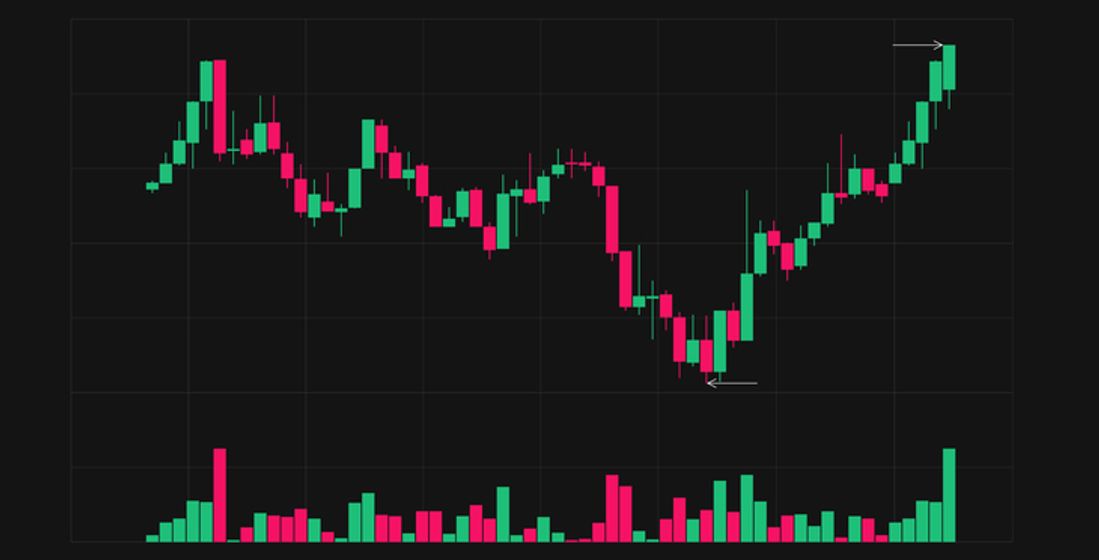
Financial markets behave in a similar way. The S&P 500 has returned roughly 10% per year on average over the last century, but nearly 40% of trading days end with negative returns. Since 1980, the market has experienced a correction of 10% or more approximately once every 18 months, even though it has generated positive annual returns in about three out of every four years.
Diversification Is Your Best Defense
Many bracket participants make the mistake of picking too many Cinderella teams. While one surprise run can separate a bracket from the competition, relying on several unlikely outcomes usually ends badly.
Investing rewards a different approach. According to J.P. Morgan, missing just the 10 best trading days between 2004 and 2023 would have cut an investor's annualized return by more than half. Those best days often occur during periods of extreme market uncertainty, making them nearly impossible to predict.
Another study from Hartford Funds found that only about 2% of publicly traded U.S. companies accounted for nearly 40% of the stock market's total wealth creation between 1926 and 2023. Since no one knows which companies will become the next Apple or Nvidia, diversification gives investors the highest probability of owning tomorrow's biggest winners.
Emotion Is the Real Opponent
March Madness is unforgettable because of its upsets. Fans remember buzzer beaters and Cinderella stories far more than expected victories. Psychologists refer to this as the availability bias, which is our tendency to give more weight to memorable events than to ordinary ones.
The same bias affects investors. Many people rush into stocks after major rallies or sell during market declines because recent events feel more important than long-term trends. Research from DALBAR has consistently shown that the average equity investor significantly underperforms the broader market over long periods, largely because emotional decisions lead to poor market timing.
The Bottom Line
Winning a bracket is not about predicting every upset. It is about making choices that maximize your chances over many games.
Investing follows the same principle. No one can consistently forecast recessions, earnings reports, or market rallies. The investors who build lasting wealth are usually the ones who stay diversified, remain invested through volatility, and trust long-term probabilities over short-term headlines.
In both March Madness and the stock market, the smartest strategy is not to chase the impossible. It is to consistently play the odds.